For the last few years, my mornings started the same way most people’s do.
Alarm.
Phone.
Notifications.
Scroll.
Before my brain had fully woken up, it had already consumed market noise, news headlines, Twitter opinions, and WhatsApp messages. I’d enter the day reactive instead of intentional.
Somewhere along the way, without realizing it, I had drifted away from something that used to define me: sports.
I’ve always loved playing. Cricket, football, table tennis, badminton - I’m not elite at any one of them, but I pick up games quickly and compete well. That’s always been enough to make me love it. The learning curve, the rhythm, the feeling of flow.
But the last 3–4 years were different. Work intensified. Friends moved cities. Schedules stopped aligning. Sports became occasional bursts - one good week, then nothing for months.
Until recently.
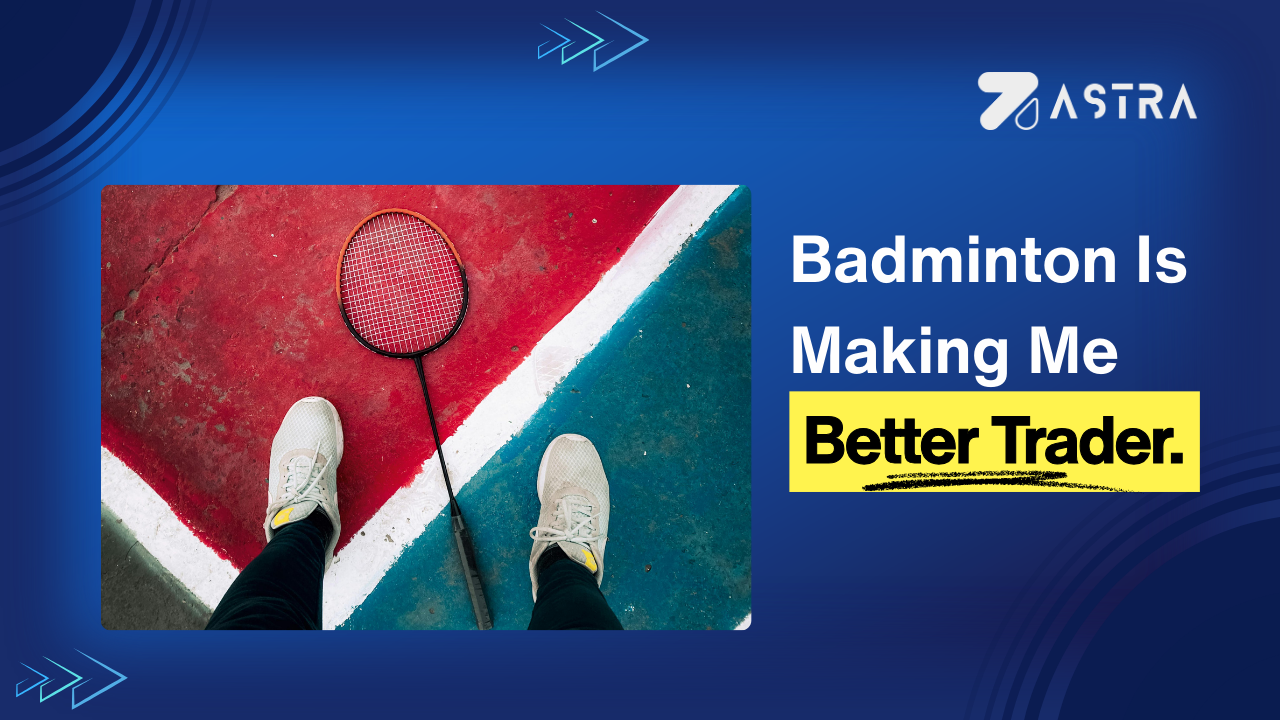
Now, every morning, I play badminton with three of my closest friends.
And I can’t overstate what it’s changed.
The Death of the Morning Scroll
The first difference is simple but powerful.
I wake up early because I have somewhere to be. There’s no time to lie in bed and scroll.
No headlines.
No charts.
No dopamine hits from notifications.
For the first hour of my day, my brain belongs to me.
That alone feels like a mental detox.
Instead of absorbing noise, I move.
Instead of reacting, I act.
It’s hard to explain how big that shift is unless you’ve experienced both versions of your morning.
One drains you before the day starts.
The other builds momentum before you’ve even looked at a screen.
The One Hour Where I’m Fully Present
When we play, we play intensely.
Smashes. Fast rallies. Lunging saves. Trash talk. Sweat.
For that one hour, I forget everything else. Positions. P&L. Deadlines. Uncertainty.
It’s just movement and instinct.
And I feel like the truest version of myself in that hour.
Steve Magness once wrote:
“We can’t photoshop our image. We can’t fake our way to expertise. We’re forced to confront our own doubt, anxiety, and humanity.
That’s brutal. And beautiful.”
Sport does that.
You can’t hide behind narratives.
You can’t rationalize a bad serve.
You either adjust, or you lose the next point.
There’s something deeply grounding about that.
The Lesson Sports Forces You to Learn
In badminton, if you dwell on your last mistake, you lose the next rally.
If you replay your last bad smash in your head, you’re half a second late on the next return.
The game doesn’t wait for your emotions to settle.
You reset instantly.
And I realized - trading is identical.
The market doesn’t care about your last loss.
It doesn’t reward you for your last win.
If you’re still emotionally attached to what just happened, you’re slower on the next decision.
For a long time, I intellectually understood this in trading.
Recently, I’ve started embodying it, and it has very quickly started showing in my performance.
Something Has Shifted in My Trading
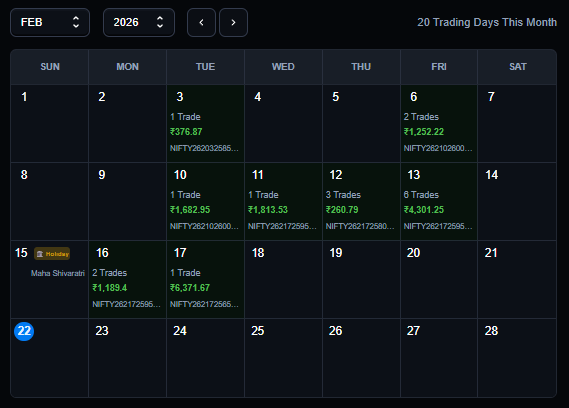
This past week was interesting.
I had strong profits. But that’s not the part I’m proud of.
What stood out was the process.
Losses didn’t trigger frustration.
Wins didn’t trigger euphoria.
There was rhythm.
Just like sport.
Play the point. Reset. Play the next.
I found myself cutting losers cleanly.
I found myself not chasing after a good day.
I found myself more focused during execution.
The mental carryover is real.
Attention Span Is a Muscle
We talk about attention as if it’s a personality trait.
It’s not.
It’s trained.
When you spend your mornings scrolling, jumping between apps, reacting to stimuli, you train your brain for fragmentation.
When you spend an hour tracking a shuttlecock, anticipating angles, adjusting footwork, and staying alert - you train sustained focus.
And that spills over.
My trading sessions feel calmer. I’m less tempted to switch timeframes impulsively. I’m not checking my phone mid-trade.
The noise has reduced.
The Emotional Upgrade
There’s also something else.
Physical movement changes emotional baseline.
I feel elevated. Not hyped - stable.
Happier, yes. But also more grounded.
It’s harder to spiral over a small loss when your body is active and your mind isn’t cluttered.
Stress doesn’t accumulate the same way.
And that stability shows up in risk management.
When you’re emotionally stable, you size more rationally. You don’t revenge trade. You don’t increase risk to compensate for ego bruises.
You execute.
Trading Is a Performance Sport
I’ve written before that trading is closer to sport than to prediction.
This experience reinforced that belief.
Athletes don’t just practice technique. They train their nervous system.
They improve reaction speed. Endurance. Emotional reset.
In trading, we obsess over strategy and entries.
But what if performance is more about:
- Emotional recovery speed
- Focus endurance
- Physical baseline health
- Ability to reset after error
Badminton has reminded me of something simple.
You cannot fake performance in real time.
You can’t talk your way out of a missed shot.
You adjust.
The Deeper Realization
I thought adding a new indicator or refining a setup would improve my trading.
Instead, waking up early and sweating with friends might have done more.
It reduced doomscrolling.
It improved attention.
It stabilized emotion.
It forced presence.
And presence is everything in markets.
We spend so much time optimizing strategies.
Maybe sometimes the real upgrade is outside the screen.
The market will always be volatile.
The real question is whether you are.
Right now, I feel more stable than I have in years.
And ironically, it started with picking up a racket again.
Check Out ASTRA