
Let me start with something that might feel slightly uncomfortable: most traders say they want consistency, but their behavior suggests they want stimulation.
Watch what gets attention in trading communities. Screenshots of weekly option gains. Leveraged crypto flips. “Turned ₹50,000 into ₹3 lakhs in three days.” Intraday expiry plays during Fed announcements. Nobody shares a screenshot of “Risk managed properly. +1.2% month. Slept well.”
Yet if you examine long-term professional performance, what actually compounds is not adrenaline. It is durability.
Morgan Housel writes in The Psychology of Money,
“The highest form of wealth is the ability to wake up every morning and say, ‘I can do whatever I want today.”
That kind of freedom does not come from chasing volatility. It comes from managing risk so well that volatility doesn’t control you.
The contradiction is obvious. Traders claim they want freedom, but they design their behavior around excitement.
This isn’t the first time I’ve questioned what traders actually chase. In an earlier piece, I wrote about how traders often become mentally enslaved to the market instead of gaining freedom from it. The pattern keeps repeating - we say we want autonomy, but we behave like we need stimulation.
The Market Is a Variable Reward Machine
Modern trading platforms are built like high-speed casinos disguised as productivity tools. Real-time price ticks. Green and red flashes. Instant order fills. Leverage accessible in seconds. Every candle is feedback. Every notification is a trigger.
From a behavioral standpoint, markets operate on what psychologists call a variable reward schedule - the same reinforcement mechanism used in slot machines. You don’t know when the reward will come. That unpredictability makes it powerful. Small wins reinforce engagement. Big wins reset expectations. Losses create urgency to recover.
Research consistently shows that intermittent rewards produce stronger behavioral conditioning than predictable ones. In trading, this translates into compulsive checking, impulsive re-entry, and overtrading - not because traders lack intelligence, but because the environment is neurologically stimulating.
Studies in retail trading behavior support this. Research by Barber and Odean found that high turnover retail traders significantly underperform low turnover participants. The more frequently individuals trade, the worse their net returns tend to be after costs. Activity feels productive. It often isn’t.
Below is a visual representation of turnover vs. performance commonly cited in retail trading research.
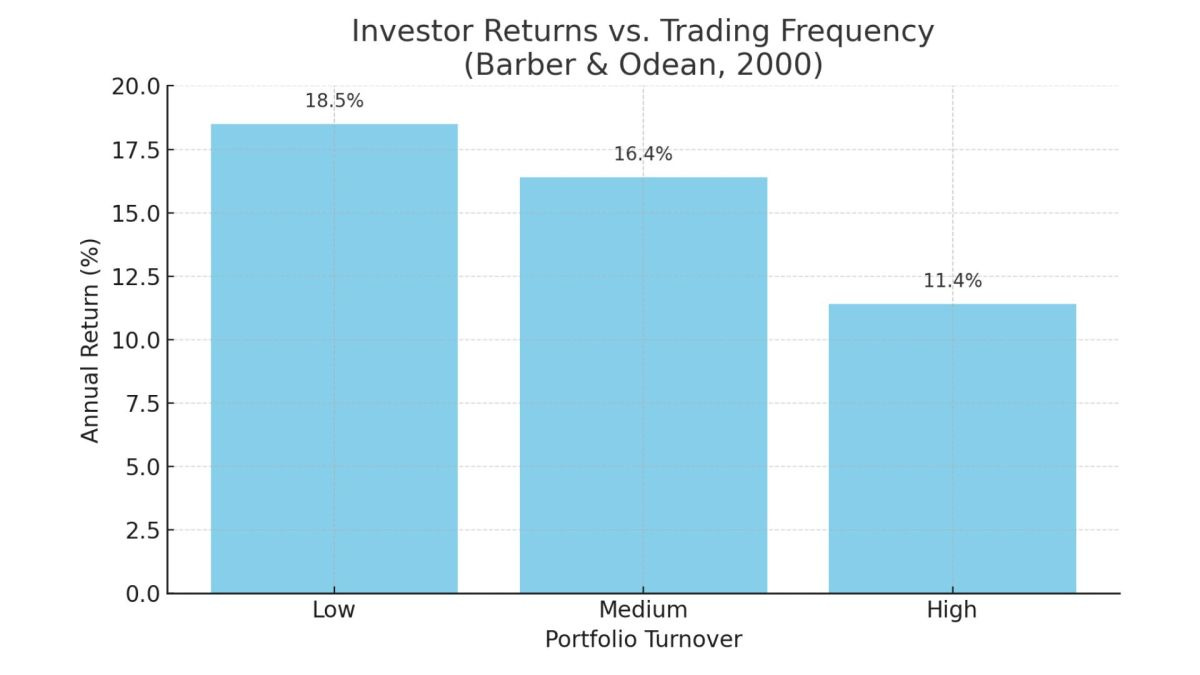
The pattern is not subtle. Excitement increases activity. Activity reduces returns.
Look at Today’s Market Environment
Now zoom out to the current macro landscape. AI-driven rallies, rapid repricing of rate cut expectations, geopolitical tensions influencing commodities, crypto reacting sharply to ETF narratives. There is always something happening.
Volatility clusters have become normal. Narrative shifts are fast. News cycles are constant. The environment rewards attention, not patience.
But attention is not the same as edge.
Paul Tudor Jones once said,
“Don’t focus on making money; focus on protecting what you have.”
That advice sounds almost too simple. It is also profoundly unexciting. Protecting capital does not trend on social media. It does not generate dopamine spikes. It does not produce viral screenshots.
Yet capital preservation is mathematically dominant. A 50 percent loss requires a 100 percent gain to recover. A 20 percent loss requires 25 percent to break even. Drawdowns compound asymmetrically.
Below is a simple drawdown recovery curve that highlights the nonlinear nature of losses.
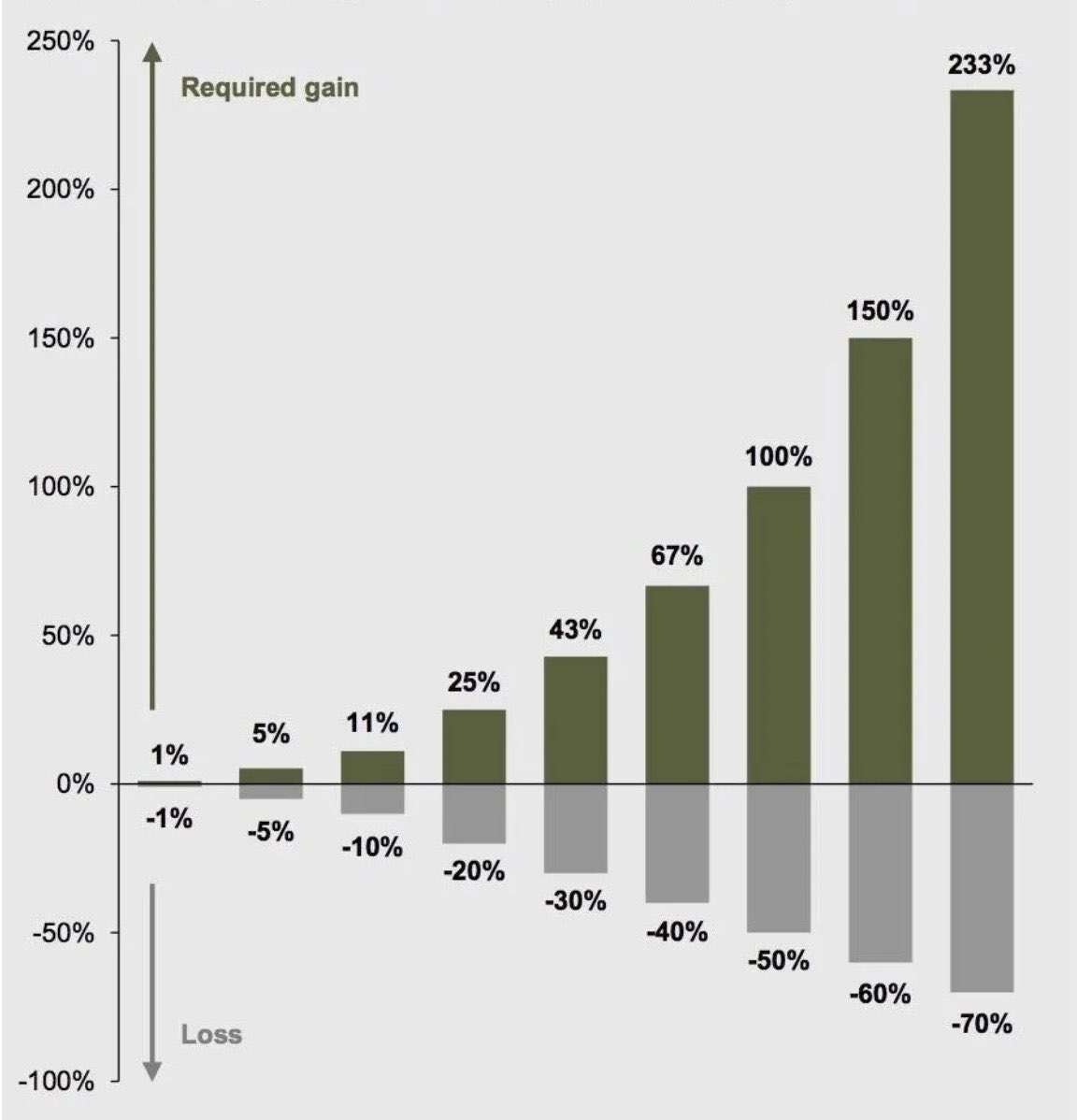
The deeper the drawdown, the disproportionately larger the recovery required.
When traders chase stimulation through oversized bets, the risk is not just emotional volatility. It is mathematical handicap.
The Identity Trap
There is also a deeper layer at play: identity.
If you see yourself as someone who “catches big moves,” quiet sessions feel wasted. If you measure progress through dramatic wins, steady returns feel insignificant. Identity drives behavior more than logic does.
Even the story of Michael Burry, often romanticized for his subprime short, hides the uncomfortable middle chapter. He endured extended periods of negative carry and intense investor pressure before the thesis paid off. The payoff was dramatic. The holding period was psychologically draining. We celebrate the climax. We ignore the endurance.
I explored this tension more deeply in Conviction Under Pressure, where I broke down how even someone like Michael Burry endured extended periods of doubt and negative carry before being proven right. The endurance phase is never glamorous — but it’s where durability is built.
Consistency rarely looks heroic in real time.
That is why most traders gravitate toward environments that feel active. Activity creates the illusion of control. Control feels empowering. But illusion is not edge.
Data Reveals the Pattern
Look at retail options behavior. In recent years, zero-days-to-expiry (0DTE) options volumes have surged dramatically in U.S. markets. These instruments offer extreme short-term leverage and rapid feedback. They are, structurally, stimulation-heavy.
Short-term optionality can be a legitimate instrument in professional hands. But for many participants, it represents compressed dopamine cycles. Fast payoff. Fast loss. Fast emotional swing.
If you consistently design your trading around rapid stimulation, you condition your nervous system to expect intensity. Quiet discipline becomes uncomfortable. That discomfort leads to deviation.
Freedom or Dependency?
Many traders say they trade to escape the 9–5 structure. To gain autonomy. To own their time.
But if your mood shifts with every tick, if you check P&L compulsively, if you feel restless without volatility, the dependency has simply changed form. The office boss is gone. The screen has replaced it.
Recently, I also wrote about how physical routines - like starting the day with movement instead of market noise - have dramatically improved my focus and trading stability. It reinforced something important: performance begins before the market opens.
Real trading freedom looks boring. You execute defined setups. You size rationally. You log behavior. You walk away. No compulsive refreshing. No emotional spikes. No revenge trades.
It looks stable.
And stability does not feel thrilling.
The Compounding Advantage of Boring
The traders who last are rarely the loudest. They are methodical. They track performance beyond profit. They analyze streak behavior. They study drawdown patterns. They refine sizing. They care more about variance control than headline returns.
This is where performance tracking shifts from optional to essential. When you measure risk deviation, streak clustering, behavioral triggers, and consistency of execution, you begin to see how often stimulation correlates with underperformance.
At ASTRA, this has become increasingly clear. When traders start reviewing their own behavioral metrics - not just P&L but frequency of impulse trades, risk escalation after wins, clustering of losses - the patterns are undeniable. The biggest drawdowns rarely follow calm weeks. They follow emotionally charged ones.
Soon, we are expanding this layer further by integrating behavioral and physiological tracking, because trading decisions are not isolated from cognitive state. If stimulation drives deviation, tracking state becomes as important as tracking price.
The Real Choice
The market does not reward excitement. It rewards controlled exposure over long periods.
Stimulation feels productive. Discipline compounds quietly.
If you are honest, the question is not whether you know this. It is whether you are willing to choose consistency over intensity repeatedly, even when no one is watching and nothing dramatic is happening.
Because that choice - made dozens of times a month - is what separates traders who stay entertained from traders who stay solvent.